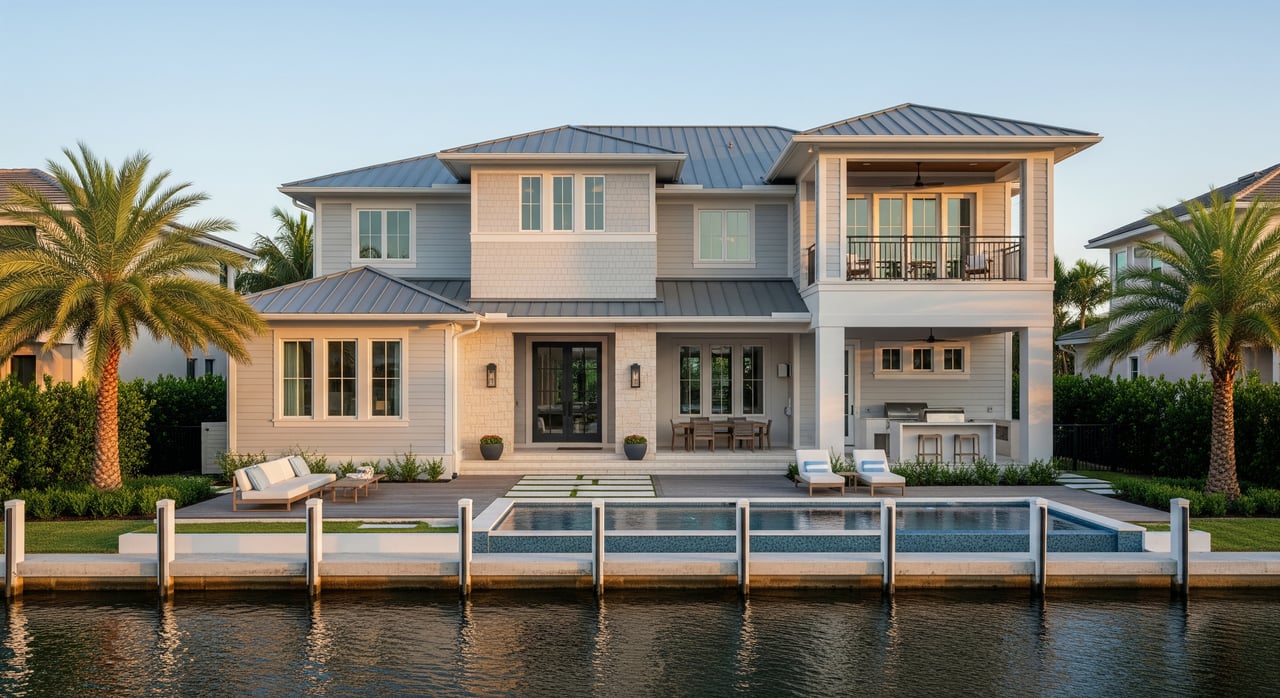
Salt, sun and summer storms make Bradenton living special, but they are tough on homes. If you love a clean, coastal‑modern look, you also need materials and details that can handle humidity, salt air and high winds. In this guide, you will learn which upgrades last in our Gulf climate, how to navigate code and insurance, and how to maintain your home so it looks great for years. Let’s dive in.
Bradenton climate realities that shape design
Bradenton summers are hot, humid and stormy, with typical highs in the upper 80s to low 90s and heavy summer rainfall. You can see this in the Sarasota Bradenton climate summary, which shows roughly 48 to 55 inches of annual precipitation and a pronounced rainy season. Regional climate data confirms why moisture and UV wear matter here.
Local planners also note sea level rise over the past several decades and the potential for more frequent tidal flooding in the future. That means water intrusion, wind resistance and corrosion control should guide your upgrade list. You can review regional flood and sea level context in the City of Sarasota’s public outreach on flooding and sea level rise.
Exterior materials that last in salt and sun
Siding and cladding
Choose fiber‑cement panels or plank profiles, or well‑detailed stucco systems, to achieve crisp coastal lines without the rot risk of untreated wood. If you love natural wood accents, use species or products rated for marine exposure and plan for frequent inspections and finish care. Keep color palettes light and use exterior coatings formulated for UV and mildew resistance.
Roofs that shed water and resist wind
Standing‑seam metal, concrete tile or clay tile roofs perform well when installed to Florida wind standards. Confirm attachment details and wind ratings align with the current Florida Building Code, and use corrosion‑resistant fasteners and flashings. Review code updates and windborne debris region rules in this Florida Building Code summary.
Marine‑grade hardware everywhere
Salt air accelerates corrosion on railings, gates and exposed fasteners. Specify 316 marine‑grade stainless steel or powder‑coated aluminum for exterior hardware to avoid pitting and staining. Learn why 316 stainless is essential in coastal air from this materials guidance.
Exterior paint and coatings
Coastal exposure shortens paint life, especially on windward facades. Use 100 percent acrylic or elastomeric systems rated for high UV and mildew, and plan annual inspections with touch‑ups as needed. For practical repaint insights, see this coastal homeowner paint guide.
Windows and doors that protect and perform
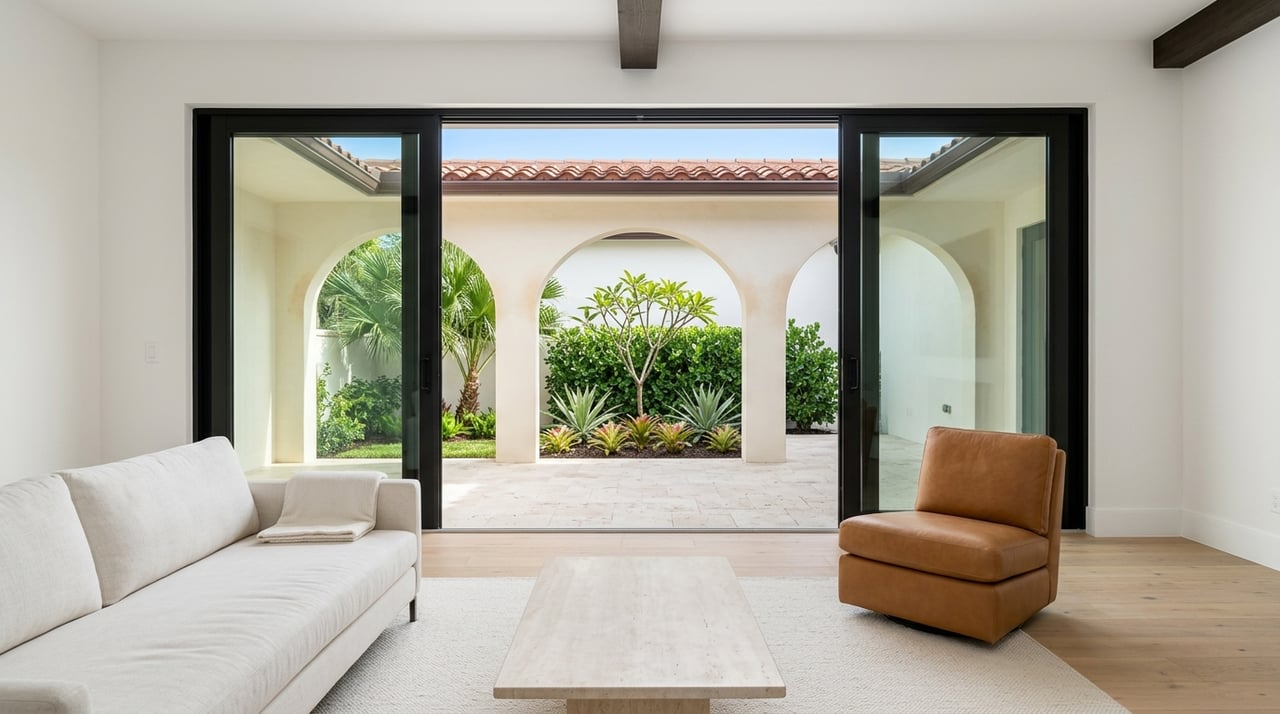
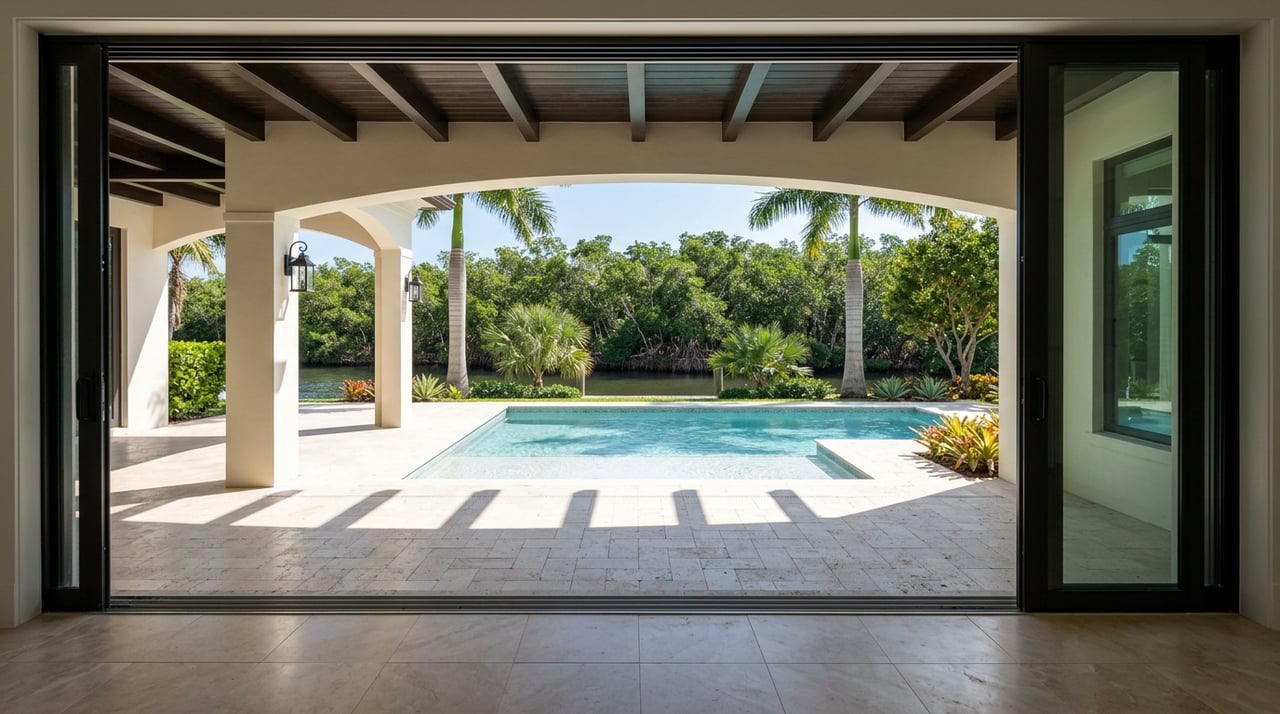
Large glass can define coastal‑modern style, but it must perform in wind and debris conditions. In mapped windborne debris regions, you will need impact‑rated glazing or approved protection systems to meet code. Before ordering, verify your property’s requirements against current Florida Building Code maps in this FBC overview.
For frames, choose non‑ferrous options like aluminum with durable finishes or UV‑stable vinyl. Design sills and drips that push water out and allow easy rinsing to remove salt.
Outdoor living built for the coast
- Decking: Use capped composite systems or tropical hardwoods rated for marine exposure, and ensure ventilation beneath the deck.
- Railings and connectors: Select 316 stainless or powder‑coated aluminum with through‑bolted connections. Avoid bare steel in exposed areas.
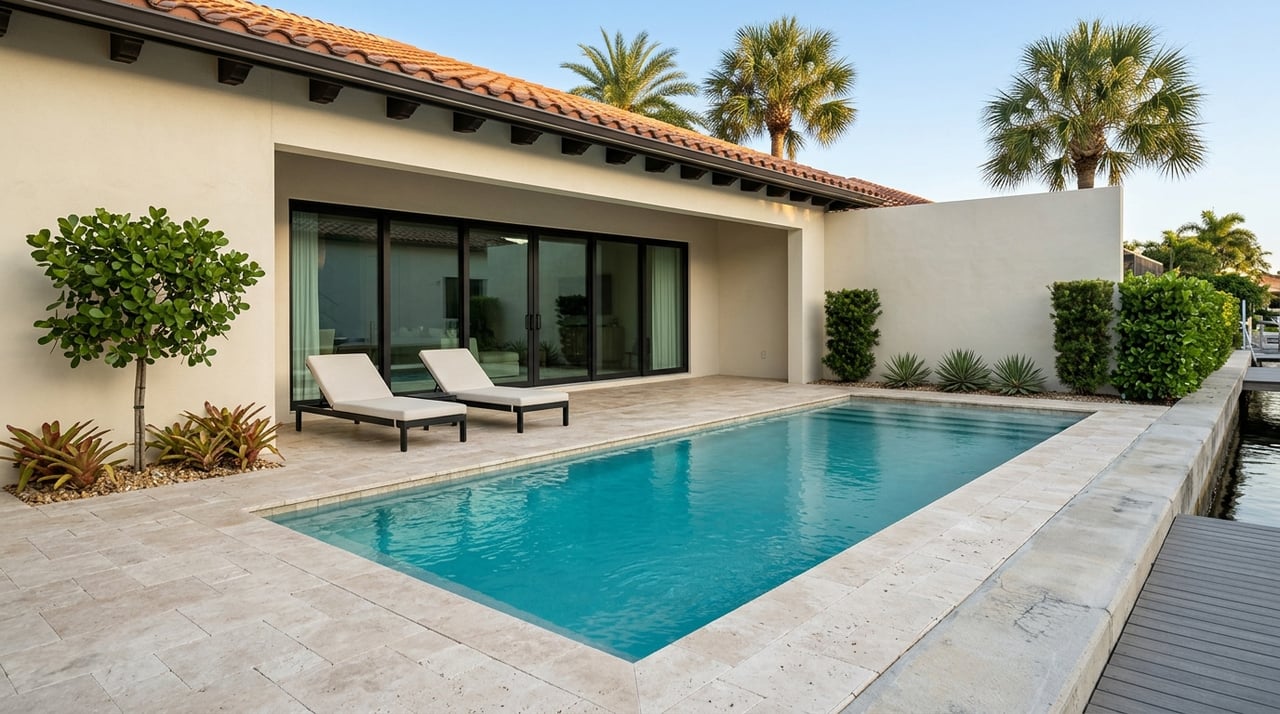
- Pavers and tile: Favor porcelain or sealed concrete pavers with slip‑resistant textures for pool and patio zones.
Systems that fight moisture and corrosion
Elevate HVAC condensers, electrical panels and critical equipment above expected flood levels where possible. If elevation is not feasible, use protective enclosures and automatic shutoffs. Choose HVAC units with factory corrosion‑resistant coatings and install on galvanized or concrete pads with stainless connections.
Continuous ventilation and right‑sized dehumidification help control indoor humidity. Seal and balance ductwork to reduce condensation and mold risk during the long wet season.
Interior finishes with a coastal‑modern feel
Large‑format porcelain tile and polished concrete deliver a minimal, airy aesthetic and stand up well to moisture. Engineered hardwoods or high‑quality vinyl plank can work in spaces away from splash zones. Specify mildew‑resistant paints and cabinetry built with moisture‑resistant substrates, then seal edges and penetrations.
Site and landscape strategies that add resilience
Good drainage protects everything you upgrade. Create positive grading away from the foundation, upsize downspouts, and use permeable beds or dry wells where appropriate. This reduces ponding during summer downpours and helps during high‑tide backflow events.
On shoreline properties, consider living shorelines that use plantings and natural features to absorb wave energy and limit erosion. Florida Sea Grant offers training and resources on living shoreline techniques. For a coastal‑modern landscape, choose salt‑tolerant natives like seagrape, muhly grass and yaupon holly from UF/IFAS Florida‑Friendly plant lists.
Permits, codes and insurance to check first
Before design selections, confirm your flood zone and elevation so you know what rules and risks apply. Manatee County’s tool makes it easy to find your flood zone. Then confirm your address against wind and debris maps in the current Florida Building Code to understand opening protection requirements.
Flood insurance pricing has shifted under Risk Rating 2.0, and some Manatee County areas saw notable changes. It is smart to consult an insurance professional early, consider an elevation certificate, and factor premiums into your total cost of ownership. Get local context from this Bradenton flood insurance report.
Budget, ROI and a simple maintenance plan
Investing in stronger construction and mitigation tends to pay off over time in avoided losses and fewer disruptions. National research highlights favorable benefit to cost outcomes for many measures, which supports choosing durability over quick cosmetics. Explore the long‑term value in the NIBS Natural Hazard Mitigation Saves report.
A light maintenance routine preserves both beauty and performance. Rinse exterior hardware and windows seasonally to remove salt, inspect caulking and flashings annually, and touch up paint on high‑exposure facades as needed. Build these tasks into your calendar so small issues do not become big repairs.
Quick homeowner checklist
- Verify flood zone and base flood elevation, then align upgrades with the site context.
- Confirm windborne debris requirements and select impact‑rated openings where required.
- Specify 316 stainless hardware, corrosion‑coated HVAC units and sealed ductwork.
- Create positive drainage, use permeable hardscapes and select salt‑tolerant native plants.
- Plan seasonal rinsing, annual exterior inspections and a realistic repaint cycle.
Ready to tailor these ideas to your home and goals, whether you are optimizing before listing or buying with resilience in mind? Reach out to Priya Acharya PLLC for a property‑specific plan that balances coastal‑modern style with smart, durable choices.
FAQs
What does “coastal‑modern” mean for a Bradenton home?
- It blends clean lines, light palettes and indoor‑outdoor flow with materials that handle humidity, salt air and high winds, such as fiber‑cement siding, impact‑rated glass and marine‑grade hardware.
Which roofing materials stand up best to Gulf winds in Bradenton?
- Standing‑seam metal and engineered concrete or clay tile perform well when installed per the Florida Building Code with proper wind‑rated attachments and corrosion‑resistant flashings.
How can I manage flood insurance costs when upgrading a Bradenton property?
- Start by confirming your flood zone and elevation, then talk to an insurance professional about how mitigation, documentation like elevation certificates and community programs can affect premiums under Risk Rating 2.0.
Are impact windows worth it near bays or barrier islands?
- In mapped windborne debris regions they are often required, and even outside those areas they add protection, reduce storm prep time and help maintain clean lines without external shutters.
What low‑maintenance plants work near salt and wind exposure?
- Salt‑tolerant natives like seagrape, muhly grass, sea oats, yaupon holly and saw palmetto support a restrained coastal look while tolerating spray and stabilizing soils.