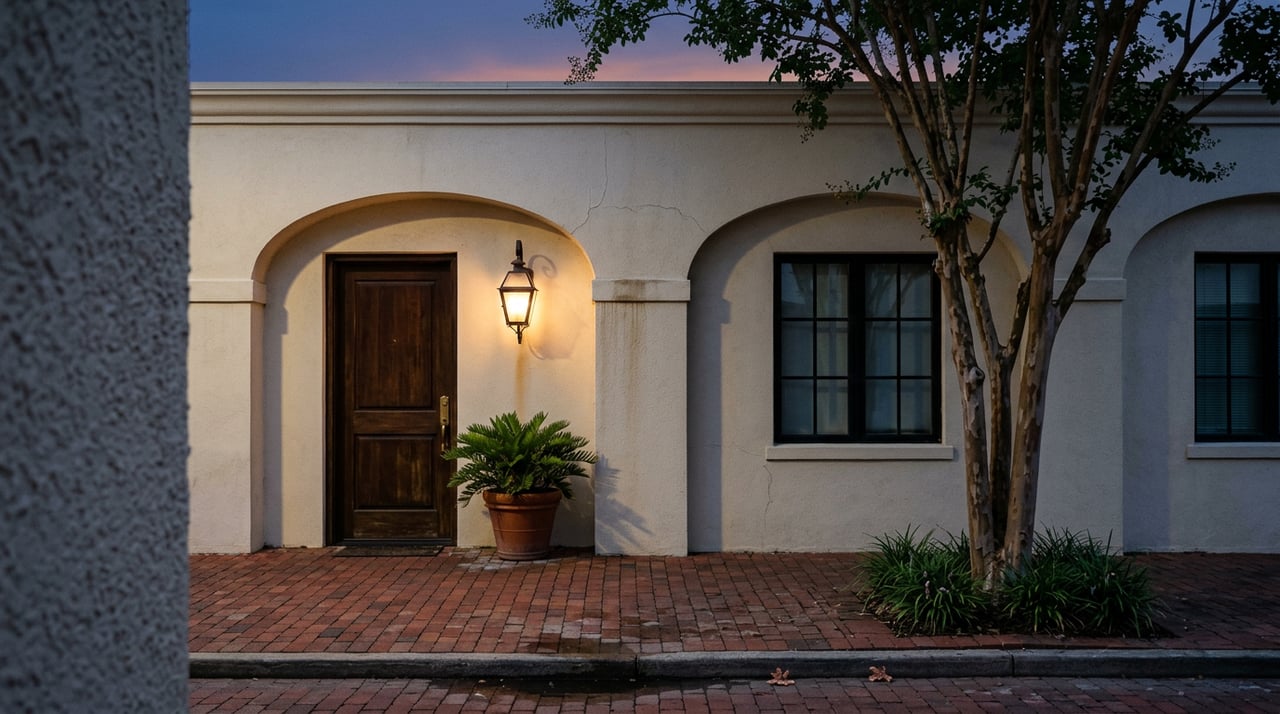
For five years, 1701 N. Franklin Street sat there. If you live in Tampa Heights or cut through on your way to Armature Works, you've probably driven past it without registering it as anything more than a dark storefront with good bones. That building used to be something. It was Tampa's first food hall, the Hall on Franklin, and it closed at the start of the pandemic in 2020 and never reopened. Five years is a long time for a building that size to sit vacant on a street this central, and long enough that most people stopped wondering what would eventually take its place.
Something is finally taking its place, and it's not one restaurant. It's three, stacked into the same address, each built around a completely different night out.
What's actually moving in
The ground floor is splitting between two concepts. Uno Mas: Taqueria + Lounge is a Mexico City-style taco spot with two hidden speakeasy-style mezcal lounges tucked inside it, built around agave spirits and mezcal tastings. Sharing the ground floor is Hail Mary Social Club, an elevated sports bar with a wraparound island bar, TVs covering every angle, and a kitchen led by chef David Reyes, who has taken home prizes at the last three Tampa Bay Wine and Food Festivals. Reyes describes Hail Mary as a classic sports bar by day that turns into a late-night lounge with DJs after dark. Upstairs, the second floor becomes Boogie Heights, a retro dance hall built around a disco ball, a 1970s-themed dance floor, half-circle booths, and a stage, aimed squarely at the 70s-through-90s crowd that has had nowhere in Tampa Heights to actually dance.
The three concepts share ownership, a group that includes local investor Joshua Pardue along with Dor Haim, Enrique DeJesus, Al Rogers, and Robert Stern. Pardue has said the openings will be staggered rather than simultaneous, but the idea is for guests to move seamlessly from tacos to game day to the dance floor without leaving the building. As of this writing, none of the three has announced a firm open date. Permits and construction have been moving through the back half of 2026, and the project has taken on the working name "1701" in some local coverage, with an estimated buildout cost near $15 million.
Why the first version of this building didn't work
The interesting part isn't the concepts themselves. Sports bars and taco lounges aren't rare in Tampa. The interesting part is what Pardue has said about why he thinks this stretch of Franklin Street can support them now, when the building's first life as a food hall didn't survive the length of a single normal restaurant cycle before the pandemic finished it off.
Pardue owns other property along the same corridor, and his read on it isn't about food quality. It's about the sidewalk.
"That stretch from Big Blue north to the YMCA should be one of the most walkable retail corridors in the city."
That's a specific claim about a specific six or seven blocks, and it lines up with something the city is doing at the same time. The Downtown Community Redevelopment Agency has approved roughly $6 million for a Franklin Street Vision project covering sidewalks, pedestrian lighting, crossings, and wayfinding along about 1.1 miles of the corridor, from Jackson Street downtown up to Palm Avenue near Tampa Heights. Cedric McCray, who directs the Tampa CRA, has framed the spending as priming the area for investment rather than reacting to it. In other words, the city isn't waiting to see if 1701 succeeds before improving the street around it. Both are happening at once, on purpose.
That matters for anyone who remembers the old Hall on Franklin. A food hall with good vendors can still fail if the block outside it doesn't give people a reason to walk from one end to the other. Three very different concepts under one roof, tied to a streetscape overhaul on the same stretch, reads less like a bet on any single restaurant and more like a bet on whether Franklin Street itself can hold foot traffic after dark.
The building sits between two things Tampa Heights already has going
Part of why this location makes sense now is what's already anchoring either end of it. Kenyetta Hairston-Bridges, who leads the Tampa Downtown Partnership, has described Franklin Street as connective tissue linking the River District, the downtown core, and Tampa Heights. On one side of that connection is Water Street Tampa, which keeps adding hotels, apartments, and restaurants near the waterfront. On the other is Armature Works, the restored 73,000-square-foot former streetcar barn on the Hillsborough River that anchors the Heights District with its Heights Public Market, rooftop bar, and a steady rotation of restaurants and event programming.
1701 N. Franklin sits close enough to Armature Works that once it's open, a night that starts with tacos or a game at the bar can end a short walk away at the market or the riverfront lawn. That's the logic behind the corridor plan generally: turn a street that currently breaks down into empty storefronts and awkward crossings under the interstate into something people are willing to walk the full length of, rather than driving between destination points and parking twice.
What to actually put on your calendar this fall
Here's the practical split for anyone who lives nearby. The 1701 building doesn't have confirmed opening dates yet, so treat it as something to watch rather than something to plan a specific weekend around. Keep an eye on the block for signage and soft-launch signs as fall moves into winter.
What is confirmed is Armature Works' Heights Fall Fest, now in its sixth year, running two weekends this October: October 14 and 15, then October 21 and 22. It's a family event on the Pier and lawns with a riverside pumpkin patch, a petting zoo, live music, and a canned-goods drive benefiting Metropolitan Ministries. If you want a low-stakes way to see how much the Heights District has filled in around Armature Works, that's the weekend to do it, and it's a short walk from the Franklin Street stretch that's about to get busier.
The broader pattern worth noticing is that this isn't an isolated building getting a facelift. It's one property, a city streetscape investment, and an already-established anchor a few blocks away, all pointed at the same six or seven blocks at the same time. Franklin Street has had the bones for this for years. What's changed in 2026 is that the pieces are finally landing in the same stretch, in the same season.
If you've lived in Tampa Heights long enough to remember when the Hall on Franklin was still open, or long enough to have stopped asking what would ever go into that building, this fall is the season to start paying attention to that block again.
Priya Acharya works across Tampa Bay and the Gulf Coast, and pays attention to the same kind of corridor-level detail that shapes daily life in a neighborhood, not just its market data. If you're weighing what a neighborhood like Tampa Heights actually offers day to day against other parts of the Bay area or Sarasota's coast, Priya Acharya can walk you through it. Schedule a personalized consultation whenever you're ready to talk specifics.