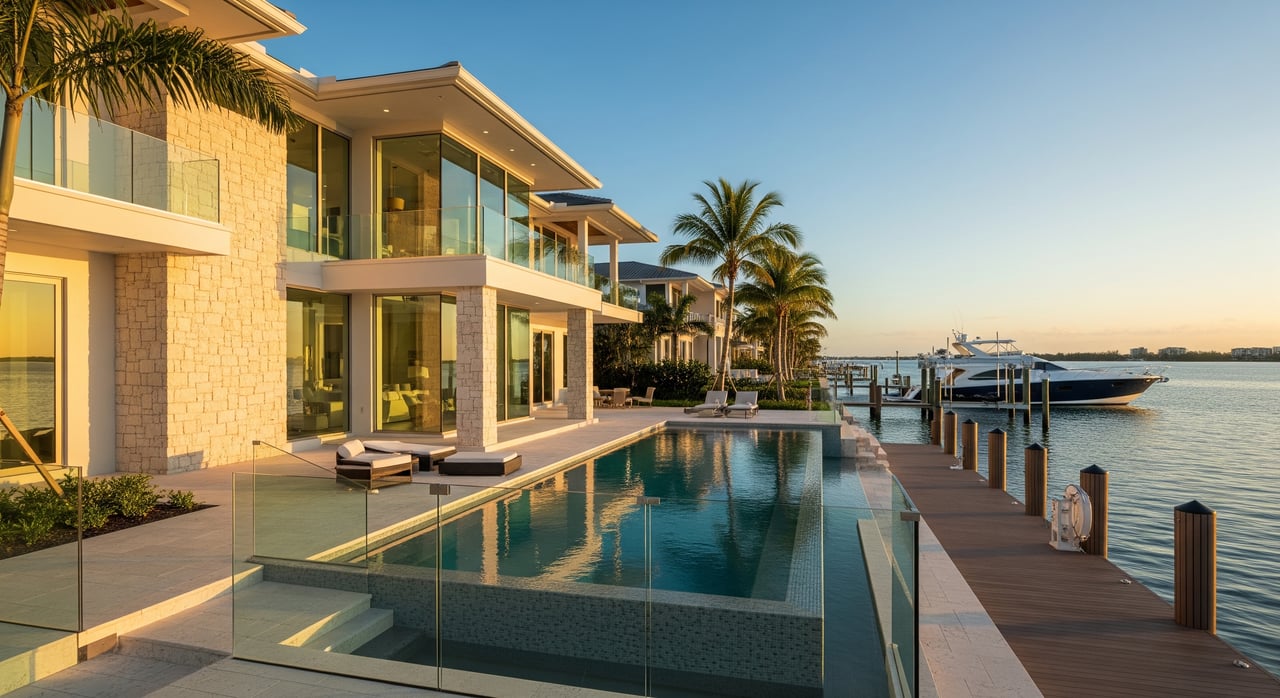
What makes one Sarasota waterfront condo soar in price while another a few blocks away sits on the market? If you are buying or selling at the top end, the answer is more nuanced than a price per square foot. You want a clear, local framework so you can read a valuation or CMA with confidence and set a smart strategy. In this guide, you’ll learn how luxury homes and condos are valued in Sarasota today, which local factors move price the most, and what to verify before you list or make an offer. Let’s dive in.
How luxury value is set in Sarasota
Sarasota’s luxury market is shaped by lifestyle and scarcity. Affluent buyers come for the beaches, boating, and arts, and they weigh proximity to the Gulf, downtown, and privacy. Inventory in the top submarkets is often tight, especially for unique waterfront lots. At the same time, financing costs, insurance, and condo governance play a bigger role than many expect.
Seasonal patterns matter. You see more buyers in the winter, yet high-end deals can happen year-round. Time to contract can be longer for luxury properties, so pricing precision and a tailored marketing plan are essential.
The three valuation approaches you’ll see
Sales Comparison Approach
This is the primary method for most luxury homes and many condos. Appraisers and agents select the best recent closed sales and adjust for differences like location, view, lot or floor level, living area, condition, and amenities. In the luxury segment, true apples-to-apples comps can be scarce, so adjustments are often larger and more narrative-driven.
Income (Capitalization) Approach
If a property has proven rental income, value can be supported by its net operating income and relevant market cap rates. For vacation-friendly condos, lenders and appraisers look closely at documented occupancy, HOA rules, and local rental ordinances. Only verifiable income in compliance with rules is typically counted.
Cost Approach
For new builds or one-of-a-kind estates, value can be estimated as land plus the replacement cost of improvements, minus depreciation. It is helpful when comps are thin, but in active resale markets it is usually a secondary check.
Sarasota-specific drivers that move price
Location and micro-location
- Waterfront hierarchy: Direct Gulf-front or deeded private beach access often carries the highest premium. Bayfront and intracoastal settings offer boating benefits and command strong pricing, while canal-front values depend on water depth, access, and condition.
- Distinct islands: Siesta Key, Lido Key, Longboat Key, Bird Key, and Casey Key each trade differently based on beach quality, prestige, and scarcity. Pricing should be built from comps on the same key or coastline segment.
- Downtown and lifestyle: Walkability to St. Armands Circle or Main Street, and access to dining and cultural venues, can add value for buyers who want an active lifestyle.
- Lot orientation and privacy: On the water, lot width, sunset exposure, and privacy buffers can create real price separation between otherwise similar homes.
Views and exposure
- Unobstructed Gulf or bay views tend to command meaningful premiums. The permanence of the view matters. Can a future build block it? Elevation and orientation (often west-facing for sunsets) influence the premium.
- For condos, higher floors with unobstructed water lines and efficient floor plans typically sell at a premium per square foot.
Single-family vs. condominium
- Single-family waterfront: Lot width and depth, dockage, seawall condition, pool, guest spaces, and true beach access carry major weight in pricing.
- Luxury condos: Floor level, orientation, private elevator access, deeded parking, concierge services, and fitness or marina amenities influence value. HOA fees, reserves, and building condition are core to how buyers and lenders view risk and price.
Amenities and finishes
High-end finishes, custom kitchens, smart home systems, high ceilings, designer landscaping, pools and spas, outdoor kitchens, and covered terraces boost desirability. Documented, permitted renovations help you capture value. Poorly documented upgrades are often discounted.
Condition, age, and maintenance
Structural integrity, roof and HVAC age, hurricane mitigation like impact windows and doors, and seawall condition shape value. For condos, the building’s age, reserve studies, any special assessments, and maintenance history can influence price and financeability.
Insurance, climate, and flood risk
Flood zone, elevation, and wind exposure affect insurance costs and buyer confidence. Carriers, premiums, and availability matter to luxury buyers who factor carrying costs into offers. Elevated construction and mitigation features can support stronger pricing.
HOA and condo governance
HOA fees must be evaluated alongside what they cover. Strong reserves, clear maintenance plans, and clean financials support pricing. Pending litigation, underfunded reserves, or unclear structural reports can reduce buyer demand and impact loan approvals.
Financing and lender criteria
Jumbo financing availability and rates influence the buyer pool. For condos, lender approval standards like owner-occupancy ratios, delinquency rates, and litigation can affect eligibility and pricing more than for single-family homes.
Income potential and rentals
Where rules allow, proven short-term or seasonal rental income can support value through the Income Approach. The key is verifiable history and compliance with city, county, and HOA rules. Projected income without proof rarely moves appraised value.
How to price a unique estate or penthouse
When your property is truly one-of-a-kind, your valuation should combine comps, narrative support, and expert documentation.
- Start with the best closed sales from the same key or coastline, the same exposure type, and similar scale, even if you must cast a 6 to 12 month window.
- Quantify view, lot, and amenity premiums using paired sales where possible. Explain wider adjustment ranges clearly.
- If rental income is real and compliant, include an income-based cross-check.
- Support the price with a pre-listing appraisal or broker opinion and a detailed inspection.
Seller checklist: Prove and protect your price
- Pull recent closed comps from the same micro-location and exposure type.
- Commission a pre-listing inspection for high-cost items like roof, seawall, and HVAC.
- Compile permits and documentation for renovations and upgrades.
- For condos, gather HOA financials, reserve studies, meeting minutes, and any assessment history.
- Consider a professional appraisal or detailed broker price opinion if comps are limited.
Buyer and investor checklist: Verify before you bid
- Confirm the flood zone and ask for elevation certificates and current insurance quotes.
- For waterfront homes, review dock and seawall surveys and maintenance history.
- For condos, request HOA financials, reserve studies, litigation disclosures, and rental policies.
- If you plan to rely on rental income, obtain actual operating statements and verify short-term rental compliance.
Reading days on market and seasonality
Luxury properties often take longer to secure the right buyer. Do not read a longer market time as a red flag by itself. Look deeper at pricing versus the most relevant comps, marketing quality, and whether the listing passed through seasonal shifts. A strong, well-supported price paired with targeted outreach can shorten the path to a successful contract.
How to use comps the right way
- Aim for the same island or coastline segment and the same waterfront type. Gulf, bay, and canal values are not interchangeable.
- Prioritize similar views, lot or floor position, and functional layouts.
- Use closed sales for value, but review active and pending listings for competition and momentum.
- For condos, adjust for floor level, orientation, parking, amenities, and HOA health. If fees are high, weigh them against included services and reserves.
Why insurance and HOA health matter now
Insurance markets and condo governance are central to today’s luxury pricing. Higher premiums raise carrying costs and can weigh on valuations for lower-elevation or higher-risk properties. Buildings with strong reserves, clear maintenance plans, and up-to-date structural reports give buyers and lenders more confidence, which supports pricing and liquidity.
The bottom line
In Sarasota’s luxury segment, value is local, layered, and evidence-driven. The best pricing decisions combine the right comps, a clear read on view and waterfront premiums, a realistic take on insurance and HOA factors, and, where relevant, documented income. With that framework, you can set expectations, avoid costly surprises, and move forward with confidence.
If you want a pricing conversation tailored to your home, your goals, and current Sarasota conditions, schedule a one-on-one consultation with Priya Acharya PLLC. You will get boutique guidance backed by valuation rigor and deep local expertise.
FAQs
How are Sarasota luxury condos valued versus houses?
- Condos place more weight on building health, reserves, rental rules, floor level, orientation, and amenities. Houses focus more on lot, view, dockage, seawall condition, and private features like a pool or guest suite.
How much does a Gulf view add to price in Sarasota?
- There is no fixed percentage. Premiums depend on the quality and permanence of the view and must be supported by comparable sales from the same micro-location.
Do pools, docks, or deeded beach access pay off?
- Often yes. In waterfront contexts, a private dock or deeded beach access can materially increase marketability and value. Pool premiums vary by buyer profile and maintenance preferences.
How do flood risk and insurance affect value?
- Higher premiums raise carrying costs, which can reduce buyer demand and pricing for higher-risk or lower-elevation properties. Elevation, mitigation features, and updated systems can support stronger values.
What HOA or condo issues can reduce price?
- Underfunded reserves, pending litigation, deferred maintenance, or unusually high fees without offsetting services can limit financing options and reduce buyer demand.
Can short-term rental income be counted in value?
- Yes, if the income is verifiable, compliant with local and HOA rules, and supported by actual operating history. Projections without proof rarely influence appraisals.